Menopause and Exercise: How to Stay Strong, Protect Your Bones, and Keep Doing What You Love
How to Stay Strong, Protect Your Bones, and Keep Doing What You Love

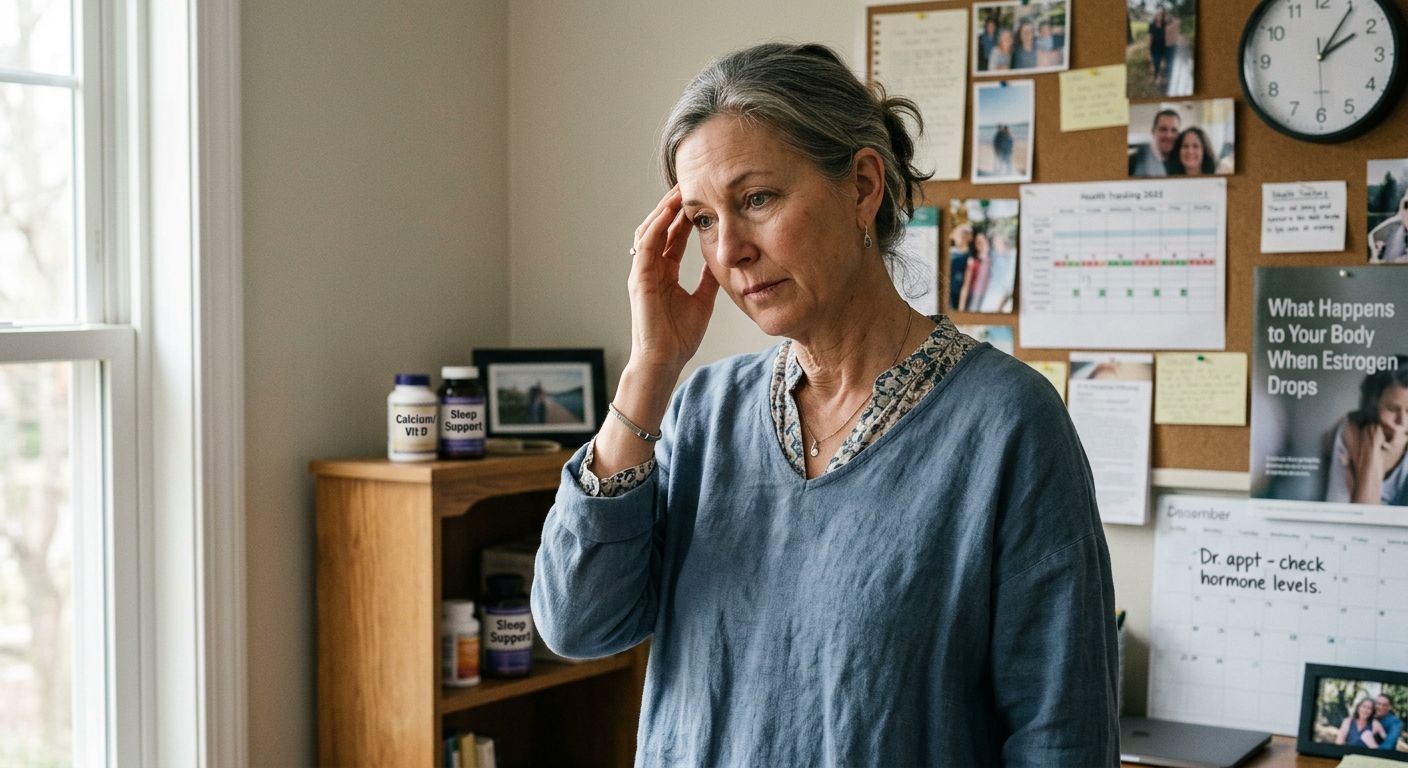
Menopause may change how your body responds to exercise, but it does not mean you need to stop lifting weights, running, playing sports, hiking, or doing the activities you enjoy. In fact, maintaining an appropriate exercise routine during perimenopause and menopause can become increasingly important for muscle strength, bone health, balance, mobility, and long-term independence.
The key is recognizing that your body may need a different approach than it did 10 or 20 years ago.
At Athletic Evolution Woburn, we work with women who want to remain strong and active throughout every stage of life. Some are experiencing pelvic floor symptoms. Others are dealing with new aches and pains, recovering from injuries, or simply noticing that workouts feel different than they used to.
The answer isn't automatically to exercise less.
Why Does Exercise Become So Important During Menopause?
During perimenopause and menopause, changing estrogen levels can affect multiple systems throughout the body.
Women may notice changes involving:
- Muscle mass
- Bone density
- Tendons and joints
- Pelvic floor function
- Bladder health
- Sleep
- Recovery
- Energy
- Body composition
These changes don't happen identically for every woman, and hormones aren't responsible for every ache, pain, or change in performance.
Aging, activity levels, medical history, previous injuries, nutrition, stress, sleep, and genetics also matter.
But there is one factor you can influence:
How you move and train.
Exercise gives your muscles, bones, cardiovascular system, and nervous system a reason to maintain and build capacity.
That makes movement one of the most useful tools available during midlife.
1. Make Strength Training a Priority
If you've spent most of your life thinking exercise means cardio, menopause is a great time to rethink that definition.
Strength training becomes particularly valuable as we age.
Muscle supports nearly everything you want your body to continue doing—from climbing stairs and carrying groceries to running, traveling, gardening, playing pickleball, and keeping up with your family.
Strength training may include movements such as:
- Squats
- Lunges
- Deadlift or hinge variations
- Rows
- Presses
- Step-ups
- Carries
- Calf raises
The specific exercises matter less than having a program that is appropriate for your body and progresses over time.
You don't need to become a competitive weightlifter.
You do need enough resistance to challenge your muscles.
For women who are completely new to resistance training, that may begin with bodyweight movements or lighter resistance. As strength improves, the challenge can gradually increase.
The goal is progression—not perfection.
2. Exercise Is Important for Bone Health
Bone health deserves special attention during and after the menopause transition.
Estrogen plays an important role in maintaining bone, and declining estrogen levels are associated with increased bone loss. Women should discuss individual risk factors and appropriate screening for osteoporosis with their medical providers.
Exercise is another important part of the conversation.
Bones respond to physical loading.
Depending on your health, experience, and medical history, an exercise program may include:
- Resistance training
- Weight-bearing activities
- Walking
- Stair climbing
- Appropriate impact exercises
- Balance training
Not every exercise is appropriate for every individual, particularly if osteoporosis, previous fractures, or other medical conditions are present.
That's why individualized programming matters.
But avoiding movement entirely isn't the answer.
A properly designed program can help women maintain the strength and physical capacity needed for an active life.
3. Don't Forget About Power and Balance
Strength matters, but it's not the only physical quality that changes with age.
Power—the ability to generate force quickly—is important for everyday life.
Think about:
- Catching yourself if you trip
- Moving quickly across a street
- Getting up from the floor
- Playing recreational sports
- Reacting when you lose your balance
Training doesn't have to be slow all the time.
For an appropriate individual, a program can gradually incorporate movements that challenge speed, coordination, and power.
Balance deserves attention too.
Exercises may involve single-leg positions, changes in direction, stepping patterns, or other tasks that challenge the body's ability to respond.
The appropriate level depends on the individual.
A woman who has trained for decades will need a different program than someone who is beginning exercise for the first time at 55.
Both can improve.
4. Your Pelvic Floor Should Be Part of the Exercise Conversation
Some women begin experiencing new pelvic floor symptoms during perimenopause or menopause.
These may include:
- Leakage during exercise
- Urinary urgency
- Increased frequency
- Pelvic heaviness or pressure
- Pain
- Discomfort during intimacy
These symptoms sometimes cause women to stop exercising altogether.
For example, someone may stop running because she leaks.
Another woman may avoid lifting weights because she feels pelvic pressure.
While temporary modifications may be appropriate, the long-term goal should be understanding why the symptom is occurring.
Pelvic floor dysfunction doesn't always mean the muscles are weak.
Some women have excessive muscle tension. Others have difficulty coordinating breathing and pelvic floor activity. Some need strength. Others need mobility or pressure-management strategies.
This is why simply telling every woman to "do more Kegels" misses the bigger picture.
A pelvic floor physical therapist can evaluate what's actually happening and develop a plan that supports your exercise goals.
[Pelvic Floor Therapy – https://www.athletic-evolution.com/]
[Kegels Aren't Always the Answer – https://www.athletic-evolution.com/]
5. You Don't Necessarily Have to Stop Running
A common question during menopause is:
"Should I stop running?"
There isn't a universal answer.
If you love running and your body tolerates it well, menopause alone isn't automatically a reason to quit.
However, if running produces pain, leakage, heaviness, or other symptoms, those issues deserve attention.
Instead of immediately eliminating the activity, we can look at factors such as:
- Training volume
- Strength
- Running mechanics
- Pelvic floor function
- Recovery
- Previous injuries
- Footwear
- Sleep
Sometimes an athlete needs a temporary reduction in volume while addressing a specific issue.
Other times, strengthening and gradual progression allow her to continue running comfortably.
The objective isn't to force everyone to run.
It's to avoid unnecessarily giving up an activity you enjoy without understanding what's causing the problem.
6. Recovery May Need to Become More Intentional
Many women notice that recovery feels different during midlife.
A workout that once required one day of recovery may suddenly produce soreness that lasts longer.
Sleep may also become less predictable, particularly when symptoms such as night sweats interfere with rest.
This doesn't necessarily mean you should stop challenging yourself.
It means recovery deserves greater attention.
Look at the entire picture:
How are you sleeping?
How much are you training?
Are you taking recovery days?
Are you eating and hydrating appropriately?
Are you doing several intense workouts in a row?
Training creates the stimulus.
Recovery allows your body to adapt to that stimulus.
Both matter.
[Sleep and Nervous System Regulation – https://www.athletic-evolution.com/]
[The Importance of Hydration – https://www.athletic-evolution.com/]
7. Pain Doesn't Automatically Mean Exercise Is Bad for You
A new ache can make people nervous.
If your knee hurts after a workout or your shoulder becomes uncomfortable while lifting, it's easy to conclude that exercise is damaging your body.
But pain is more complicated than that.
Sometimes an activity does need to be temporarily modified.
Other times, the body simply isn't prepared for the amount or intensity of activity being performed.
Instead of choosing between "push through everything" and "stop completely," physical therapy can help identify a middle ground.
That may involve:
- Modifying an exercise
- Reducing training volume
- Improving mobility
- Building strength
- Changing technique
- Gradually increasing tolerance
The goal is usually to restore capacity, not create permanent avoidance.
New, severe, or persistent pain should be appropriately evaluated rather than automatically attributed to menopause.
8. Stop Comparing Your Current Body to Your 25-Year-Old Body
This is an important mindset shift.
Your body changes throughout life.
Pregnancy may change it.
Injuries may change it.
Work and family responsibilities change your schedule.
Perimenopause and menopause can change it again.
That doesn't make your current body worse.
It means your training needs to reflect where you are now.
Maybe you need more strength work.
Maybe you need additional recovery.
Maybe your warm-up matters more than it used to.
Maybe you need help addressing a pelvic floor symptom that's preventing you from doing what you enjoy.
Successful exercise isn't about recreating exactly what you did decades ago.
It's about building the strongest, most capable version of your body
today.
What If You Haven't Exercised in Years?
You don't need an athletic background to start.
One of the biggest mistakes people make is believing they're "too out of shape" to begin exercising.
You don't have to start with five workouts per week.
You don't have to lift heavy weights immediately.
And you certainly don't have to keep up with anyone else.
Start with an appropriate challenge and build from there.
For someone who has been sedentary, that may mean beginning with:
- Regular walking
- Basic resistance exercises
- Balance training
- Mobility work
Over time, the program can progress.
Consistency matters far more than trying to transform your fitness overnight.
How Can Physical Therapy Help During Menopause?
Physical therapy can be useful when pain, injury, pelvic floor symptoms, weakness, or fear of movement interferes with your ability to exercise.
At Athletic Evolution Woburn, the goal isn't simply to help you feel better on the treatment table.
We want to help you return to the activities that matter to you.
Depending on your needs, treatment may include:
- Strength training
- Mobility work
- Pelvic floor rehabilitation
- Core training
- Balance exercises
- Return-to-running progressions
- Movement assessment
- Education about managing training load
Your goals guide the plan.
For one woman, success may mean returning to competitive running.
For another, it's lifting her grandchild without back pain.
For someone else, it may be returning to a group fitness class without worrying about bladder leakage.
Those are all meaningful goals.
Frequently Asked Questions About Menopause and Exercise
What is the best exercise during menopause?
There isn't one single "best" exercise. A well-rounded program may include resistance training, cardiovascular activity, balance work, mobility, and appropriate weight-bearing or impact activities. Your medical history, experience, goals, and symptoms should help determine the right program.
Should women lift weights during menopause?
For many women, resistance training can be an important part of maintaining muscle strength and physical function during menopause. Appropriate technique and progression are important, particularly for beginners or individuals with medical or orthopedic concerns.
Can I exercise if I have pelvic floor symptoms?
Often, yes. You may need modifications or pelvic floor rehabilitation depending on the symptoms. Leakage, heaviness, urgency, or pelvic pain shouldn't automatically mean giving up exercise.
Are Kegels necessary during menopause?
Not for everyone. Pelvic floor dysfunction can involve weakness, excessive tension, poor coordination, or a combination of factors. An assessment can help determine which approach is appropriate.
Is it too late to start strength training after menopause?
No. Exercise can be valuable throughout adulthood. The key is starting at an appropriate level and progressing based on your abilities and health.
Keep Doing What You Love
Menopause may change your body, but it doesn't have to define what your body is capable of.
You can continue building strength.
You can work on your balance.
You can support your bones.
You can address pelvic floor symptoms.
And you can continue pursuing the activities that make you feel like yourself.
The answer isn't necessarily doing less.
It's learning how to train for the body you have today and giving that body the support it needs to continue performing tomorrow.
At Athletic Evolution Woburn, we help women navigate pain, injuries, pelvic floor concerns, and changing exercise needs through individualized physical therapy and movement-based care.
Athletic Evolution Woburn
800 W Cummings Park, Suite 1750
Woburn, MA 01801
(781) 935-7701
If menopause-related changes, pain, leakage, weakness, or another physical limitation is keeping you from exercising the way you want, schedule an evaluation with Athletic Evolution. We'll help you understand what's limiting you and build a plan for moving forward with strength and confidence.