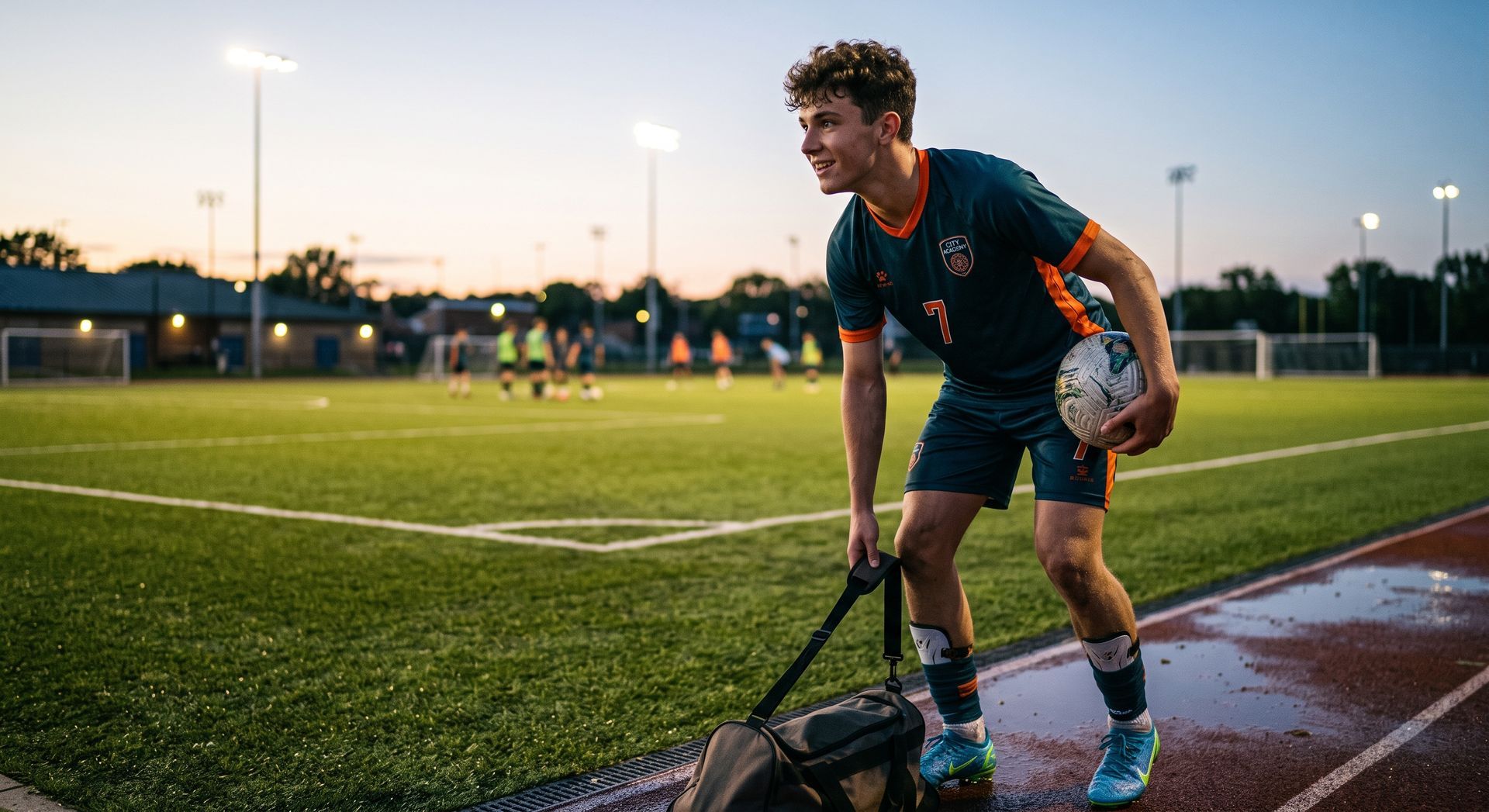
How Do I Keep My Child Healthy When the New Sports Season Starts?
How Do I Keep My Child Healthy When the New Sports Season Starts?
A new sports season brings excitement, new goals, and a return to practices and competition. It can also bring a sudden increase in physical demands. One of the best ways parents can help keep young athletes healthy is by managing that transition carefully—building training gradually, prioritizing sleep and recovery, maintaining strength, and addressing pain before it becomes a bigger problem.
At Athletic Evolution Woburn, we work with youth and young adult athletes throughout the year, and the beginning of a new school sports season is a time when these habits become especially important.
An athlete doesn't need to be injured to benefit from thinking about injury prevention. In fact, the best time to address many risk factors is before pain forces an athlete out of the game.
Here's what parents should know as their children head into a new sports season.
Why Does the Beginning of a Sports Season Increase Injury Risk?
One of the biggest challenges isn't necessarily the sport itself. It's the sudden change in how much activity the athlete is doing.
Think about a student who spends part of the summer on vacation, hanging out with friends, working a summer job, or training only a few days per week.
School starts, and suddenly the schedule may include:
- Classes all day
- Practice five or six days per week
- Strength and conditioning
- Weekend games
- Club practices
- Homework
- Earlier mornings
- Less sleep
That's a major change.
The body adapts to physical stress when that stress is introduced appropriately. But when training volume or intensity increases faster than an athlete can recover, problems can develop.
This doesn't mean parents need to fear hard training. Young athletes need physical challenges to become stronger and improve.
The goal is to create the right balance between training and recovery.
1. Avoid Going From Zero to Full Speed
Imagine not running consistently for several weeks and then suddenly completing two-hour soccer practices five days in a row.
Your body would probably notice.
Young athletes are no different.
Ideally, preseason preparation begins before the first official practice. Athletes can gradually rebuild cardiovascular fitness, strength, mobility, and sport-specific skills instead of trying to develop everything during the first week of the season.
A gradual ramp-up might involve progressively increasing:
- Running volume
- Sprinting
- Jumping
- Throwing
- Cutting and changing direction
- Strength training
- Sport-specific drills
This gives muscles, tendons, joints, and the cardiovascular system time to adapt.
If the season has already started, parents don't need to panic. Instead, pay attention to how the athlete is responding to the increased workload.
Persistent pain, unusual fatigue, declining performance, or difficulty recovering between practices may indicate that the athlete needs additional recovery or evaluation.
2. Don't Ignore Pain That Keeps Coming Back
Young athletes are often incredibly motivated to stay on the field.
They may minimize pain because they don't want to:
- Miss practice
- Lose playing time
- Disappoint teammates
- Fall behind
- Lose their starting position
That's why parents should pay attention to recurring complaints.
Normal post-exercise muscle soreness usually improves as the body recovers. Pain that repeatedly appears during the same movement, gets progressively worse, causes limping, changes technique, or doesn't improve with appropriate recovery deserves more attention.
Watch for signs such as:
- Limping after practice
- Avoiding one leg
- Repeated knee or ankle pain
- Persistent shoulder or elbow discomfort
- Back pain during sports
- Swelling
- Decreased range of motion
- Changes in running or throwing mechanics
You don't necessarily need to assume the worst when your child mentions discomfort.
But you also shouldn't assume every complaint is simply "growing pains."
Early assessment can sometimes prevent a manageable issue from becoming something that sidelines the athlete for weeks.
[Youth Sports Physical Therapy –
https://www.athletic-evolution.com/]
3. Make Sleep Part of the Training Program
When school returns, sleep is often one of the first things to suffer.
Athletes have early mornings, late practices, homework, social commitments, and phones competing for their attention.
But sleep isn't optional recovery time.
It's part of training.
Sleep supports physical recovery, learning, concentration, reaction time, and overall health. For a student-athlete, it also supports the mental demands of balancing academics and athletics.
A young athlete who consistently trains hard while sleeping poorly may have difficulty recovering between sessions.
Parents can support better sleep by encouraging a consistent evening routine, limiting unnecessary late-night screen time, and recognizing that recovery may occasionally need to take priority over adding another workout.
More isn't always better.
Sometimes the most productive thing an athlete can do is recover.
4. Fuel and Hydrate for the Work They're Doing
Busy school schedules can create another problem: athletes don't always eat and drink enough to support their activity.
A student may rush through breakfast, eat lunch hours before practice, and then head directly into a demanding training session.
Proper nutrition is outside the scope of physical therapy treatment, and athletes with specific nutritional concerns should work with an appropriate qualified professional. But from a recovery standpoint, parents should understand that active bodies need adequate fuel and hydration.
Hydration becomes especially important during hot late-summer and early-fall practices.
Athletes should generally arrive at practice already hydrated rather than attempting to replace an entire day's fluids once training begins.
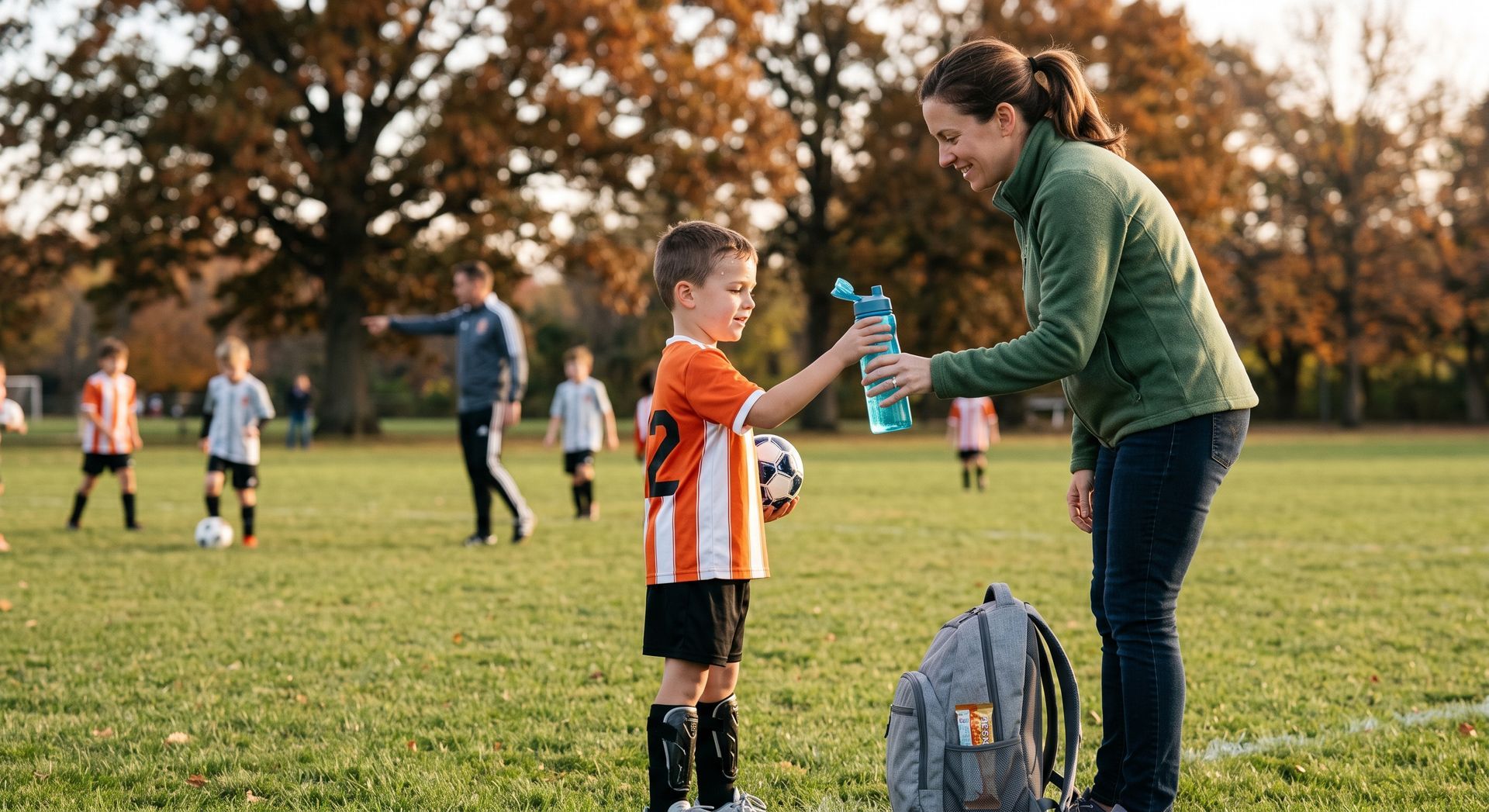
Parents can encourage simple habits such as carrying a water bottle during school and making hydration part of the athlete's normal routine.
[The Importance of Hydration – https://www.athletic-evolution.com/]
5. Keep Strength Training in the Picture
There's an old misconception that young athletes should only practice their sport.
In reality, appropriately designed strength and conditioning can be an important part of athletic development.
Strength training can help athletes develop the physical qualities necessary to run, jump, land, accelerate, decelerate, and change direction.
Depending on the athlete, a program may work on:
- Lower-body strength
- Single-leg control
- Core strength
- Upper-body strength
- Balance
- Power
- Landing mechanics
- Coordination
The program should match the athlete's age, experience, sport, and individual needs.
Young athletes don't need to train like professional bodybuilders. They need to learn good movement patterns and progressively develop physical capacity.
For an athlete playing multiple sports, a well-designed strength program can also provide something sport practice doesn't always offer: deliberate work on foundational physical abilities.
[Sports Performance for Youth – https://www.athletic-evolution.com/]
6. Pay Attention to Growth Spurts
Teenagers can seemingly grow overnight.
During periods of rapid growth, athletes may temporarily feel less coordinated or tight as their bodies adapt to changes in height and limb length.
A movement that felt easy several months ago may suddenly feel different.
Parents may notice:
- Reduced flexibility
- Changes in coordination
- New aches and pains
- Temporary changes in movement quality
This doesn't mean young athletes should stop playing sports when they're growing.
It does mean coaches, parents, and healthcare professionals should recognize that young athletes are not simply smaller versions of adults.
Their bodies are constantly developing.
Training and rehabilitation should reflect that.
7. Be Careful With Multiple Teams and Year-Round Competition
One of the biggest changes in youth athletics has been the growth of year-round competition.
A young athlete may play for a school team while simultaneously participating in club sports, private training, tournaments, and additional conditioning.
Each individual program may appear reasonable.
The problem is that no single coach may see the athlete's total workload.
For example, a soccer coach sees soccer practice. A strength coach sees gym sessions. A club coach sees weekend tournaments.
The athlete experiences all of it.
Parents are often the people best positioned to see the complete schedule.
If your child is participating in multiple programs, consider how many total hours they're training and whether they have genuine opportunities for rest.
Young athletes need time to recover physically and mentally.
8. Don't Treat Rest as a Sign of Weakness
Competitive athletes often believe taking a day off means they're falling behind.
Parents and coaches can help change that mindset.
Rest is not the opposite of training.
Rest is part of training.
Hard practices create stress on the body. Recovery allows the body to adapt to that stress.
Without sufficient recovery, athletes may experience persistent soreness, fatigue, reduced motivation, or declining performance.
A healthy sports culture teaches young athletes when to push and when to recover.
That skill can serve them throughout their entire athletic careers.
9. Make the Warm-Up Count
A warm-up shouldn't simply be a few minutes of casually stretching before competition.
A useful warm-up gradually prepares the athlete for the movements they're about to perform.
Depending on the sport, that might include:
- Light jogging
- Dynamic mobility
- Skipping
- Lunges
- Balance work
- Gradual acceleration
- Jumping and landing
- Changes of direction
- Sport-specific movements
The goal is to progressively transition from rest to competition.
A soccer player's warm-up should eventually prepare them to sprint and cut. A basketball player's warm-up should prepare them to jump, land, and move laterally.
The warm-up should make sense for what comes next.
10. Know When Physical Therapy Can Help
Sports physical therapy isn't only for athletes recovering from surgery.
A physical therapist can also evaluate an athlete experiencing recurring pain, difficulty returning to full activity, movement limitations, or concerns after a previous injury.
At Athletic Evolution Woburn, our approach considers the athlete as a whole.
Depending on the situation, an evaluation may assess:
- Strength
- Mobility
- Balance
- Running mechanics
- Jumping and landing
- Sport-specific movements
- Previous injuries
- Training demands
The goal isn't to create fear around sports.
It's the opposite.
We want young athletes participating confidently, developing physically, and enjoying the sports they love.
[Physical Therapy Woburn – https://www.athletic-evolution.com/]
What If My Child Is Returning From an Injury?
If your athlete is beginning the season after an injury, there's an additional question to answer:
Are they actually ready for the demands of their sport?
Being pain-free during normal daily activities doesn't necessarily mean an athlete is ready to sprint, jump, cut, tackle, throw, or compete at full intensity.
Return-to-sport testing may help assess factors such as strength, balance, hopping, jumping, movement quality, and sport-specific capacity.
This is particularly important after significant injuries such as ACL tears.
Rather than using this article to cover that entire process, we've addressed it separately in our guide for parents:
[Is Your Young Athlete Really Ready to Return to Sport? 7 Signs Parents Should Look For – https://www.athletic-evolution.com/]
Frequently Asked Questions About Keeping Young Athletes Healthy
How can I help prevent my child from getting injured in sports?
No strategy can prevent every sports injury. However, gradual training progression, appropriate strength and conditioning, adequate sleep, hydration, recovery, and early attention to recurring pain can help young athletes better tolerate the demands of their sport.
Should young athletes strength train?
Appropriately supervised and programmed strength training can be a valuable part of youth athletic development. The exercises, resistance, and progression should match the athlete's age, experience, and goals.
When should my child see a physical therapist for sports pain?
Consider an evaluation when pain persists, repeatedly returns during activity, causes limping or altered movement, limits performance, or doesn't improve with appropriate recovery. Sudden or severe injuries should receive appropriate medical evaluation.
How much rest does a young athlete need?
There isn't one universal answer because training schedules, sports, ages, and individual recovery needs differ. The important point is that genuine recovery should be deliberately included in the athlete's schedule rather than treated as an afterthought.
Is soreness after practice normal?
Some muscle soreness after unfamiliar or challenging exercise can be normal. Persistent, worsening, highly localized, or movement-altering pain deserves closer attention.
Start the Season Strong—And Keep It That Way
A successful sports season isn't measured only by wins, goals, personal records, or playing time.
Staying healthy enough to consistently train, compete, develop, and enjoy the sport matters too.
Parents can play an important role by looking beyond the game schedule. Pay attention to training load, sleep, hydration, strength, recurring pain, and recovery. Encourage your athlete to speak up when something doesn't feel right rather than waiting until they can no longer participate.
And remember: injury prevention doesn't mean eliminating every risk. Sports will always involve physical demands and unpredictable moments.
The goal is to help young athletes become better prepared for those demands.
At Athletic Evolution Woburn, we work with youth and young adult athletes to build strength, recover from injuries, improve movement, and safely return to the sports they love.
Athletic Evolution Woburn
800 W Cummings Park, Suite 1750
Woburn, MA 01801
(781) 935-7701
If your young athlete is experiencing pain, returning from an injury, or struggling with the increased demands of a new sports season, schedule an evaluation with Athletic Evolution. We'll help identify what's limiting them and develop an individualized plan to keep them moving forward.