Return to Sport After Injury – What Every Athlete Should Know About ACL Rehab and Performance Recovery
Being “Cleared” Is Not the Same as Being Ready
For athletes, injuries are more than physical setbacks. They interrupt routines, confidence, team dynamics, and long-term goals. Whether it’s an ACL tear, ankle sprain, shoulder injury, or chronic overuse issue, most athletes want one thing: to get back as quickly as possible.
But returning too soon—or returning without proper preparation—is one of the biggest reasons reinjuries happen.
At Athletic Evolution Woburn, we work with athletes every day who have technically been “cleared” to return, yet still lack the strength, movement control, confidence, or conditioning necessary to safely perform at a high level. This is especially true after major injuries like ACL tears.
That’s why true return-to-sport rehabilitation involves much more than eliminating pain. It requires rebuilding movement quality, restoring confidence, improving force production, and preparing the body for the real demands of competition.
The goal is not simply to participate again. The goal is to return stronger, more resilient, and more prepared than before the injury occurred.
What “Return to Sport” Actually Means
Many people assume return to sport simply means an athlete can jog, squat, or complete basic exercises without pain. In reality, the process is much more complex.
A successful return-to-sport program should evaluate:
- Strength symmetry between limbs
- Explosiveness and force absorption
- Stability during cutting and landing
- Coordination and reaction timing
- Sport-specific movement patterns
- Mental confidence under pressure
An athlete may feel “fine” during simple workouts but still struggle when reacting at game speed. The body needs to handle unpredictable movement, rapid deceleration, contact, fatigue, and emotional stress.
This is where athlete-focused physical therapy becomes critical.
At Athletic Evolution, our return-to-sport programs bridge the gap between traditional rehabilitation and true athletic performance. We help athletes transition from the treatment table back to real competition safely and strategically.
Why ACL Injuries Require a Different Level of Rehab
ACL injuries are among the most physically and mentally demanding injuries an athlete can experience.
An ACL tear affects:
- Knee stability
- Force production
- Confidence
- Coordination
- Movement mechanics
And while surgery may repair the ligament itself, surgery alone does not restore athletic readiness.
Research consistently shows that athletes who return too early after ACL reconstruction are significantly more likely to suffer another injury. In younger athletes especially, reinjury rates remain extremely high when strength and movement deficits are not fully addressed.
One of the biggest mistakes athletes make is focusing only on the injured knee itself. In reality, ACL rehab must address the entire body.
After injury, athletes often develop:
- Weakness in the glutes and hamstrings
- Compensation patterns during landing
- Poor deceleration mechanics
- Reduced single-leg stability
- Fear of cutting or pivoting
These issues increase stress on the knee and create long-term risk if left unresolved.
That’s why our ACL return-to-sport process at Athletic Evolution focuses on movement quality as much as strength.
The Biggest Mistake Athletes Make During Recovery
The most common mistake we see is rushing the process.
Athletes are motivated. Parents want their child back on the field. Coaches are excited for a return. But timelines alone do not determine readiness.
Just because it has been six months—or even nine months—does not automatically mean the body is prepared for sport.
Returning too early often leads to:
- Compensation injuries
- Chronic pain
- Reduced performance
- Reinjury to the same knee
- Injury to the opposite side
Another major issue is skipping the transition between rehabilitation and performance training.
Traditional physical therapy often stops once daily activities become pain-free. But sports demand far more than walking normally or climbing stairs comfortably.
Athletes need:
- Plyometric progression
- Sprint mechanics
- Change-of-direction control
- Rotational power
- Reactive movement training
- Fatigue management
Without this progression, athletes may technically return—but they are not fully prepared.
What Athlete Physical Therapy Should Actually Include
Athlete physical therapy should look very different from general rehabilitation.
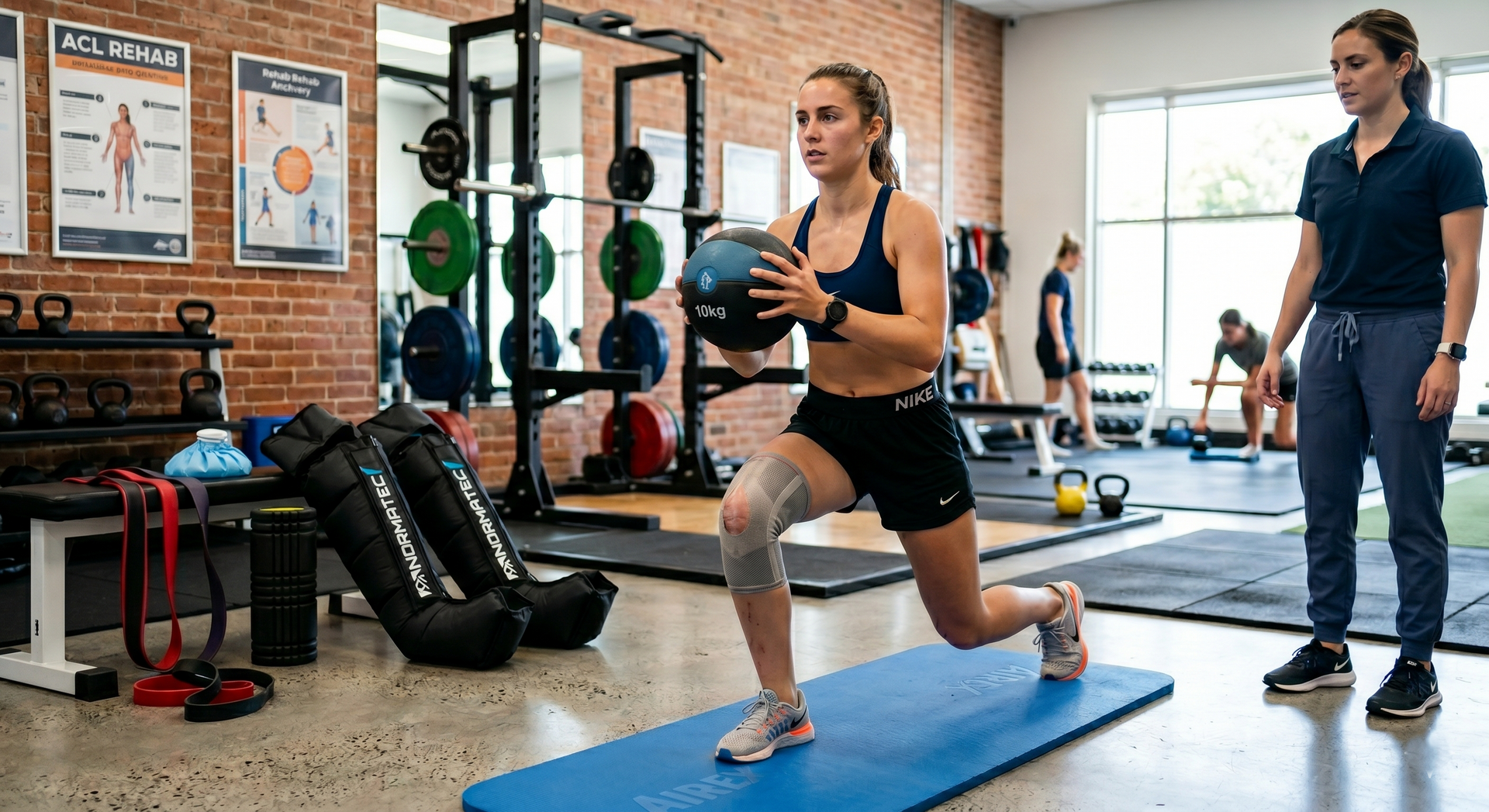
At Athletic Evolution Woburn, we combine sports medicine principles with strength and conditioning methods to create a complete recovery system.
A proper athlete rehab program should include objective testing and measurable progress markers—not guesswork.
Strength and Symmetry Testing
We evaluate whether one side is compensating for the other and ensure athletes regain proper force production.
Hop Testing and Landing Analysis
Jumping and landing mechanics tell us how the body absorbs force and stabilizes under stress.
Plyometric Progressions
Explosive movement is gradually rebuilt through jumping, acceleration, and reactive drills.
Sport-Specific Movement
A soccer player, lacrosse athlete, and basketball player all move differently. Rehab should reflect those demands.
Confidence and Mental Readiness
Many athletes physically recover before they mentally trust their body again. This part matters more than most people realize.
Full-Body Performance Training
The knee is rarely the only issue. We address the hips, core, ankles, posture, and movement patterns that contribute to injury risk.
This integrated approach helps athletes return not only healthy, but more athletic overall.
Recovery Is About More Than the Injury
One of the most overlooked aspects of recovery is how injury affects the athlete emotionally and psychologically.
Athletes often struggle with:
- Fear of reinjury
- Frustration
- Loss of confidence
- Anxiety returning to competition
- Feeling disconnected from teammates
A strong rehab environment matters.
At Athletic Evolution, we create an athlete-centered environment where athletes feel supported while still being challenged. Recovery becomes a process of rebuilding confidence—not just tissue healing.
We also educate parents and athletes throughout the process so expectations are realistic and progress is clearly understood.
Why Athletic Evolution Woburn Is Different
Many clinics focus only on rehabilitation. Others focus only on performance training.
Athletic Evolution combines both.
Our integrated model allows athletes to progress naturally from:
- Pain reduction
- Strength restoration
- Movement correction
- Athletic development
- Full return to competition
Athletes train in an environment built for movement and performance—not just treatment tables and resistance bands.
We work with:
- Youth athletes
- High school competitors
- Collegiate athletes
- Adult athletes and active adults
Whether recovering from ACL surgery, a shoulder injury, or chronic overuse issues, our goal remains the same:
Help athletes move better, recover smarter, and return stronger.
FAQs
How long does ACL return-to-sport rehab take?
Most athletes require 9–12 months before full return to unrestricted sport, depending on healing, strength, and movement readiness.
Can athletes return stronger after injury?
Yes. With proper rehab and performance training, many athletes improve movement quality and strength beyond their pre-injury level.
Do you only work with ACL injuries?
No. We help athletes recovering from ankle injuries, shoulder injuries, tendon issues, back pain, and more.
What age athletes do you work with?
We work with middle school, high school, college, and adult athletes across multiple sports.
Start Your Return-to-Sport Journey in Woburn
Recovering from injury is not just about getting back on the field—it’s about making sure your body is truly ready when you do.
At Athletic Evolution Woburn, we combine athletic physical therapy, ACL rehabilitation, and performance training to help athletes recover the right way.
Whether you’re early in recovery or preparing for your final return-to-play phase, our team is ready to help.